Bestelloperations-Dashboards
Verfolgen Sie Bestellvolumen, Bestellstatus, Rückstand, verzögerte Bestellungen, blockierte Bestellungen, Stornierungen, Retouren, Erstattungen, Kundenaktualisierungen und Ausnahme-Warteschlangen.
Diese Seite wurde mit KI übersetzt und kann Ungenauigkeiten enthalten.
Order-Management-System
Diese Order-Management-Plattform verbindet Online-Bestellungen, Marktplatzkanäle und Lagerlogistik in einem System. Sie synchronisiert Lagerbestände über alle Vertriebskanäle, automatisiert die Zahlungsabwicklung und erstellt Versandetiketten in Echtzeit, sodass Lagerbestände über alle Standorte hinweg korrekt bleiben. Integriertes Monitoring erkennt Ausnahmen, Routingfehler und Zuweisungsprobleme frühzeitig und liefert verlässliche Performance bei hohem Bestellvolumen. Im Vergleich zu typischen Enterprise-Lizenzen pro Nutzer liegt der Einstieg so, dass sich die Anfangsinvestition schnell amortisieren kann und danach dauerhaft Einsparungen gegenüber laufenden Abogebühren entstehen. Weil Volt X jedes Produkt an Ihre Arbeitsweise anpasst, können Effizienz- und Performance-Gewinne im Alltag diese Amortisation weiter vorziehen und den Return on Investment früher sichtbar machen.
Ein starkes OMS ist nicht nur ein Bestell-Tracker. Es ist die Steuerungsschicht, die Bestellungen, Bestand, Zahlungen, Fulfillment-Teams, Kunden und Kanäle aufeinander abstimmt. Volt X OMS bringt Bestellerfassung, Bestandszuordnung, Fulfillment-Orchestrierung, Zahlungstransparenz, Retouren, Stornierungen, Ausnahmebehandlung und operatives Reporting in eine geregelte Produktgrundlage. Es ist darauf ausgelegt, sich an die Art und Weise anzupassen, wie Ihr Unternehmen Bestellungen empfängt, verarbeitet, erfüllt, aktualisiert und löst, ohne Teams in ein starres Standardmodell zu zwängen.
Volt X Vorteile
Volt X OMS basiert auf den wesentlichen Fähigkeiten, die von einem ausgereiften Bestellmanagementsystem erwartet werden. Es deckt Bestellerfassung, Zahlungen, Bestandszuordnung, Fulfillment-Orchestrierung, Versand, Stornierungen, Retouren, Kundenaktualisierungen, Ausnahmen, Kanaloperationen und Bestellperformance ab.
Der Vorteil ist, dass diese Fähigkeiten nicht in ein generisches Handelsmodell eingesperrt sind. Sie können an Ihre Vertriebskanäle, Fulfillment-Netzwerk, Zahlungsprozess, Bestandsregeln, Retourenrichtlinien, Kundenservicemodell, Berichtssprache und operative Kontrollen angepasst werden.
VOLT X VORTEIL 1
Verschiedene Teams benötigen unterschiedliche OMS-Dashboards, weil sie verschiedene Teile der Bestellreise verfolgen. Bestelloperations-Teams benötigen Auftragsvolumen, Rückstands- und Statusansichten. Fulfillment-Teams benötigen Zuordnungs-, Kommissionier-, Verpackungs- und Versandstatus. Kundenservice-Teams benötigen Verzögerungen, Stornierungen, Retouren und Beschwerden. Finanzteams benötigen Zahlungs-, Erstattungs- und Anpassungstransparenz. Die Führung benötigt eine klare Sicht auf Bestellperformance, Kundenauswirkung und operatives Risiko.
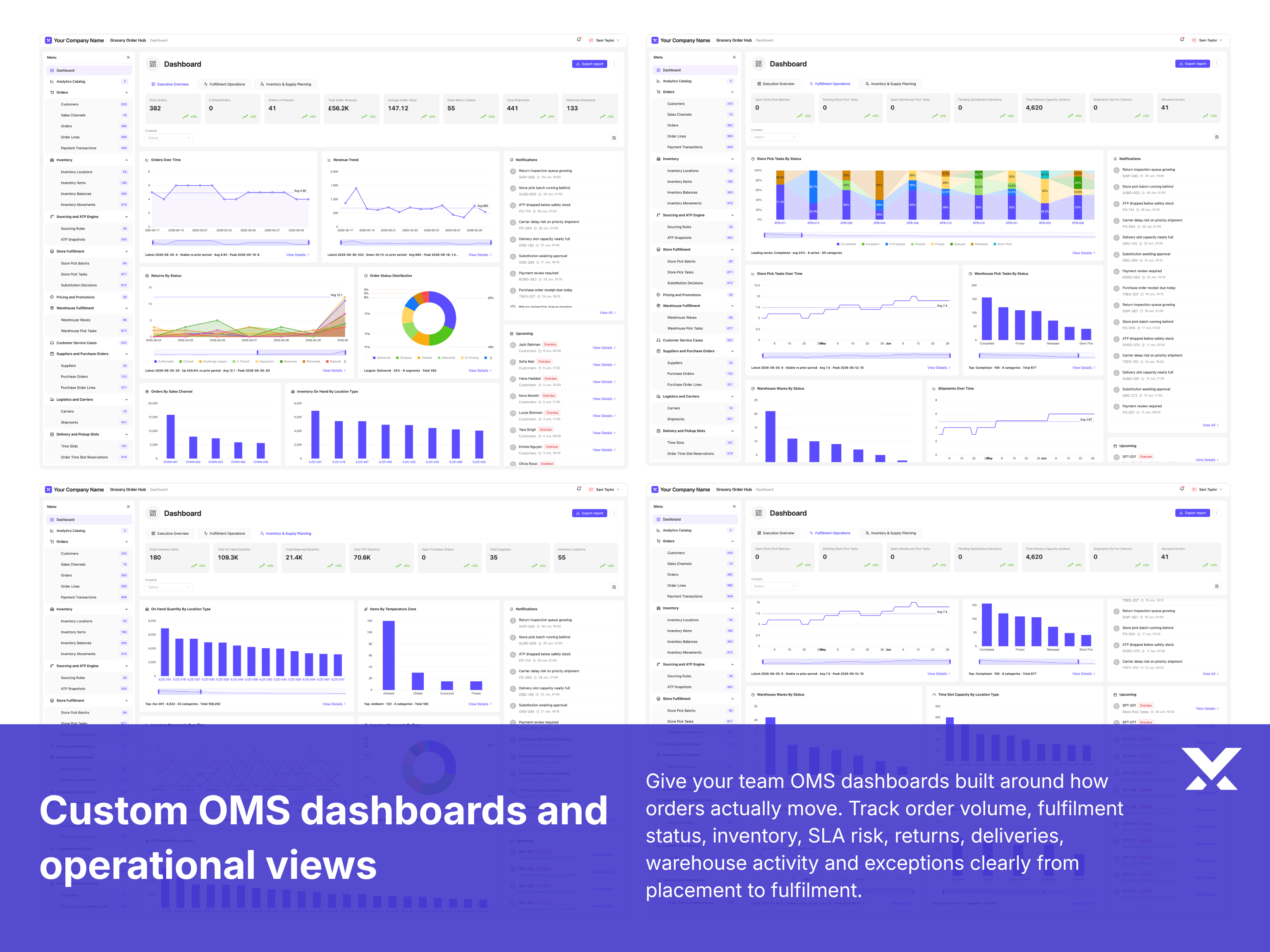
Volt X OMS kann einen vollständigen Katalog individueller Dashboards enthalten, die auf Ihren Bestellprozess zugeschnitten sind. Dashboards können um Ihre Vertriebskanäle, Fulfillment-Standorte, Lager, Filialen, Zahlungsstatus, Kundensegmente, Retourenregeln, Versandfenster, Service-Levels und Berichtsformate herum gestaltet werden. Jedes Dashboard kann auch Rollen und Berechtigungen zugeordnet werden, sodass jeder Benutzer die richtigen Informationen für seine Arbeit sieht.
Ein OMS-Dashboard sollte Teams helfen zu sehen, wo sich Bestellungen bewegen, wo sie feststecken und wo Kundenversprechen gefährdet sind. Volt X kann Dashboards erstellen, die dazu passen, wie Ihr Unternehmen Bestellungen, Fulfillment, Zahlungen, Retouren und Kundenservice überprüft.
VOLT X VORTEIL 2
Die wichtigsten OMS-Module sind diejenigen, die Bestellerfassung, Bestandszuordnung und Fulfillment verwalten. Für die meisten Unternehmen sind dies Bestellmanagement, Zuordnung und Routing sowie Fulfillment und Versand. Diese Module bestimmen, wie Bestellungen ins Unternehmen gelangen, wie Bestand zugewiesen wird und wie Bestellungen zur Lieferung bewegt werden.
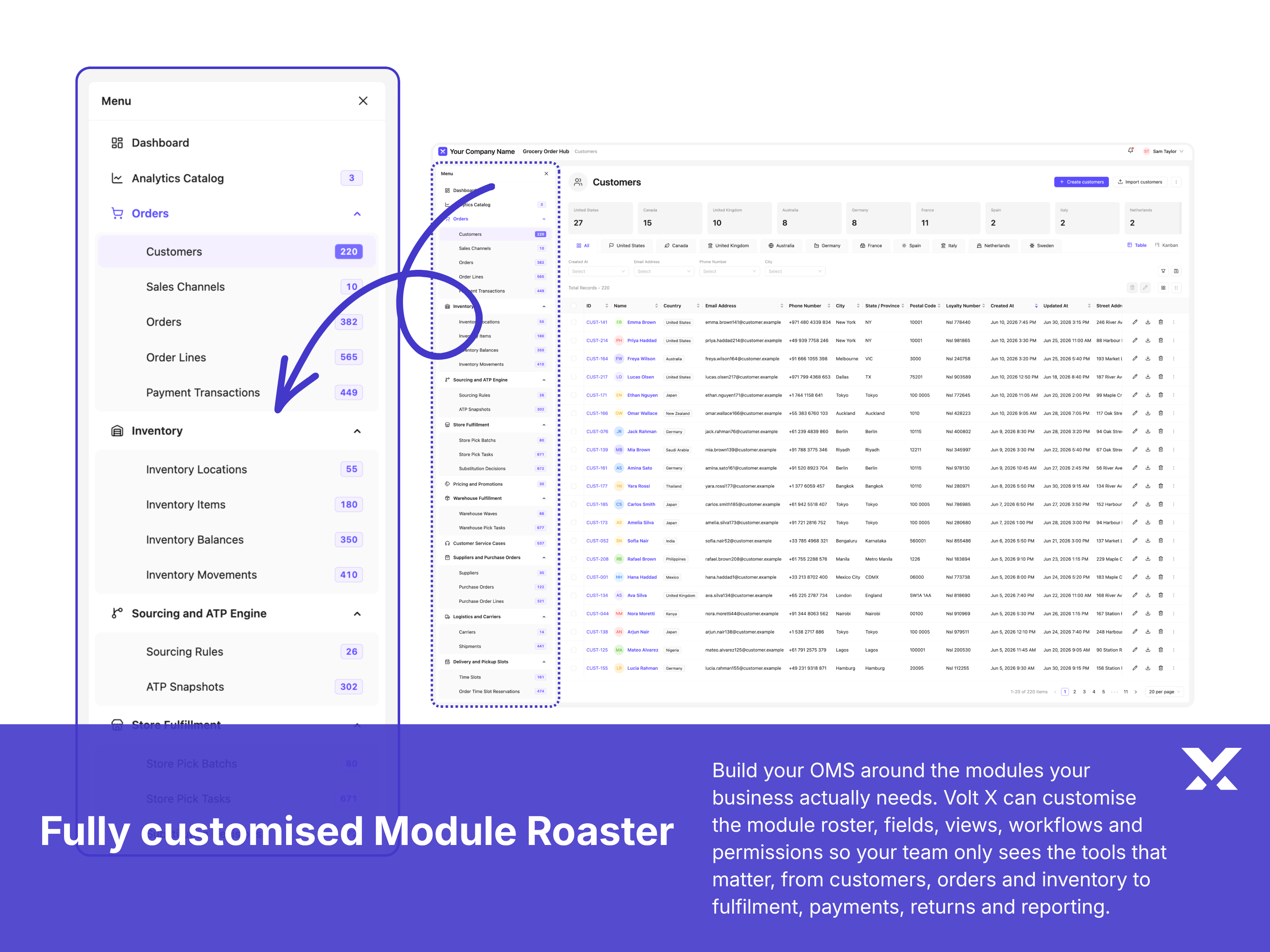
Volt X OMS kann diese Kernmodule um Ihren tatsächlichen Bestellprozess herum anpassen. Dies umfasst individuelle Bestellzustände, Formulare, Felder, Labels, Listen, Filter, Zuordnungsregeln, Routing-Logik, Fulfillment-Schritte, Zahlungsprüfungen, Ausnahmebehandlung, Genehmigungsregeln, Eigentumsfelder und Berichtsansichten. Das OMS verwendet dieselben Begriffe, Status und Workflows, die Ihre Teams bereits nutzen.
Wenn die Haupt-OMS-Module zu Ihrem tatsächlichen Bestellprozess passen, verbringen Teams weniger Zeit damit, Ausnahmen außerhalb des Systems zu beheben. Volt X kann diese Module so aufbauen, dass das OMS unterstützt, wie Ihr Unternehmen Bestellungen erfasst, zuordnet, erfüllt, aktualisiert und löst.
VOLT X VORTEIL 3
Nicht jedes Unternehmen benötigt dieselben OMS-Module. Einige benötigen Retouren. Einige benötigen Erstattungen. Einige benötigen Marketplace-Management, Filial-Fulfillment, Kundenbenachrichtigungen, Abonnements, Betrugsüberprüfung, Ersatzbestellungen, Partner-Fulfillment, Carrier-Management oder Bestellservice-Workflows. Ein individuelles OMS sollte Ihnen erlauben zu wählen, was zum Produkt gehört.
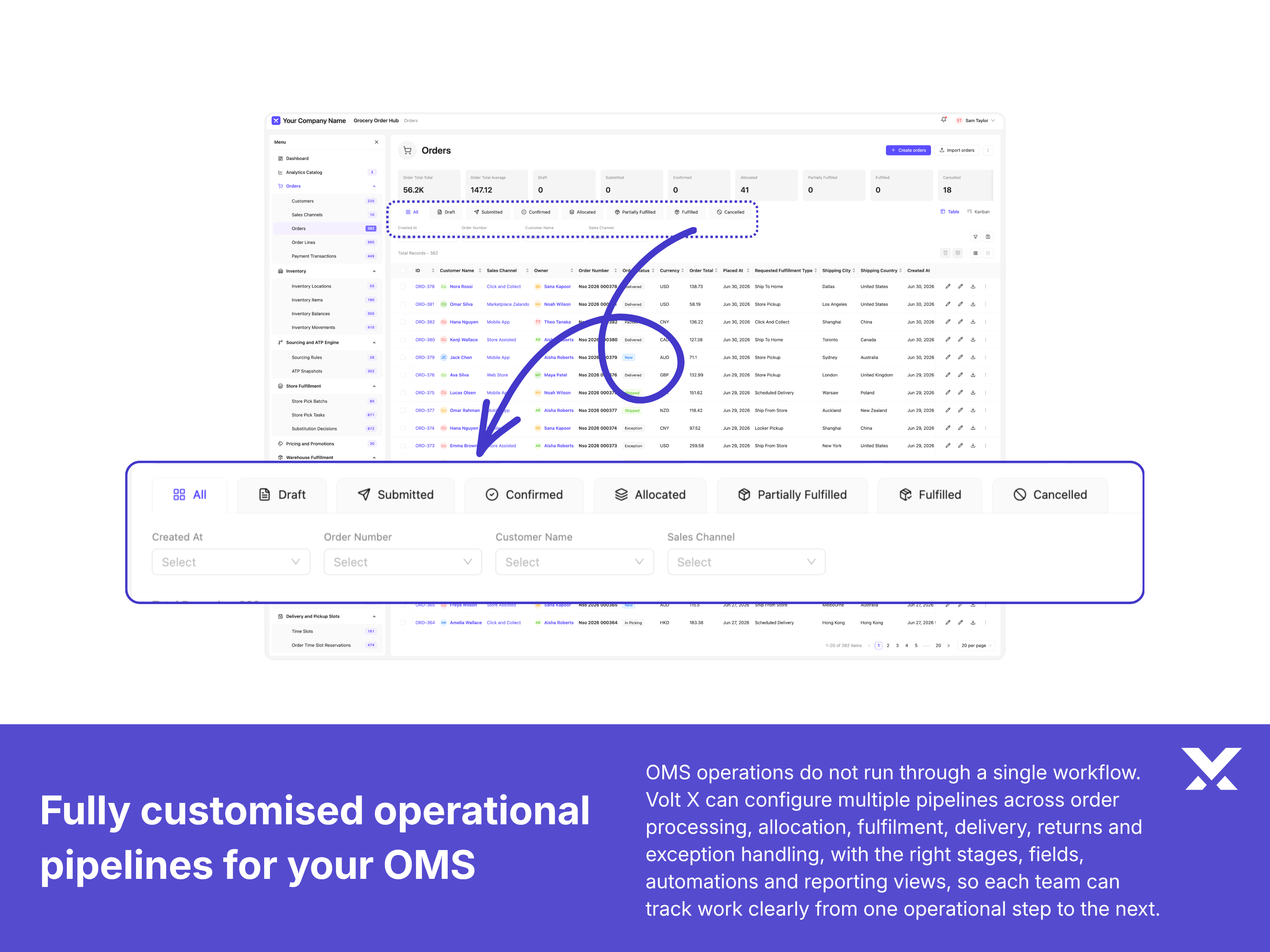
Volt X OMS beginnt mit einem Basis-OMS-Produktsystem, aber jedes Modul kann angepasst werden. Sie können die Module behalten, die Sie brauchen, die entfernen, die Sie nicht brauchen, Module mit Ihrer eigenen Bestellsprache umbenennen und Formulare, Felder, Workflows, Berichte, Berechtigungen und Dashboards in jedem Modul anpassen.
Dies bietet Ihnen den Vorteil eines ausgereiften OMS-Ausgangspunkts, ohne in eine feste Bestellmanagementstruktur eingesperrt zu sein. Volt X kann das Produkt um die Module formen, die Ihre Teams tatsächlich benötigen, mit den richtigen Namen, Feldern, Ansichten und Workflows.
VOLT X VORTEIL 4
Der OMS-Zugriff erfordert sorgfältige Kontrolle. Nicht jeder Benutzer sollte Bestellungen stornieren, Erstattungen genehmigen, den Zahlungsstatus ändern, Bestand neu zuordnen, Kundendetails bearbeiten, Fulfillment freigeben, Bestelldaten exportieren oder Routing-Regeln konfigurieren können. Gleichzeitig sollte die Zugriffskontrolle Bestelloperationen nicht verlangsamen.
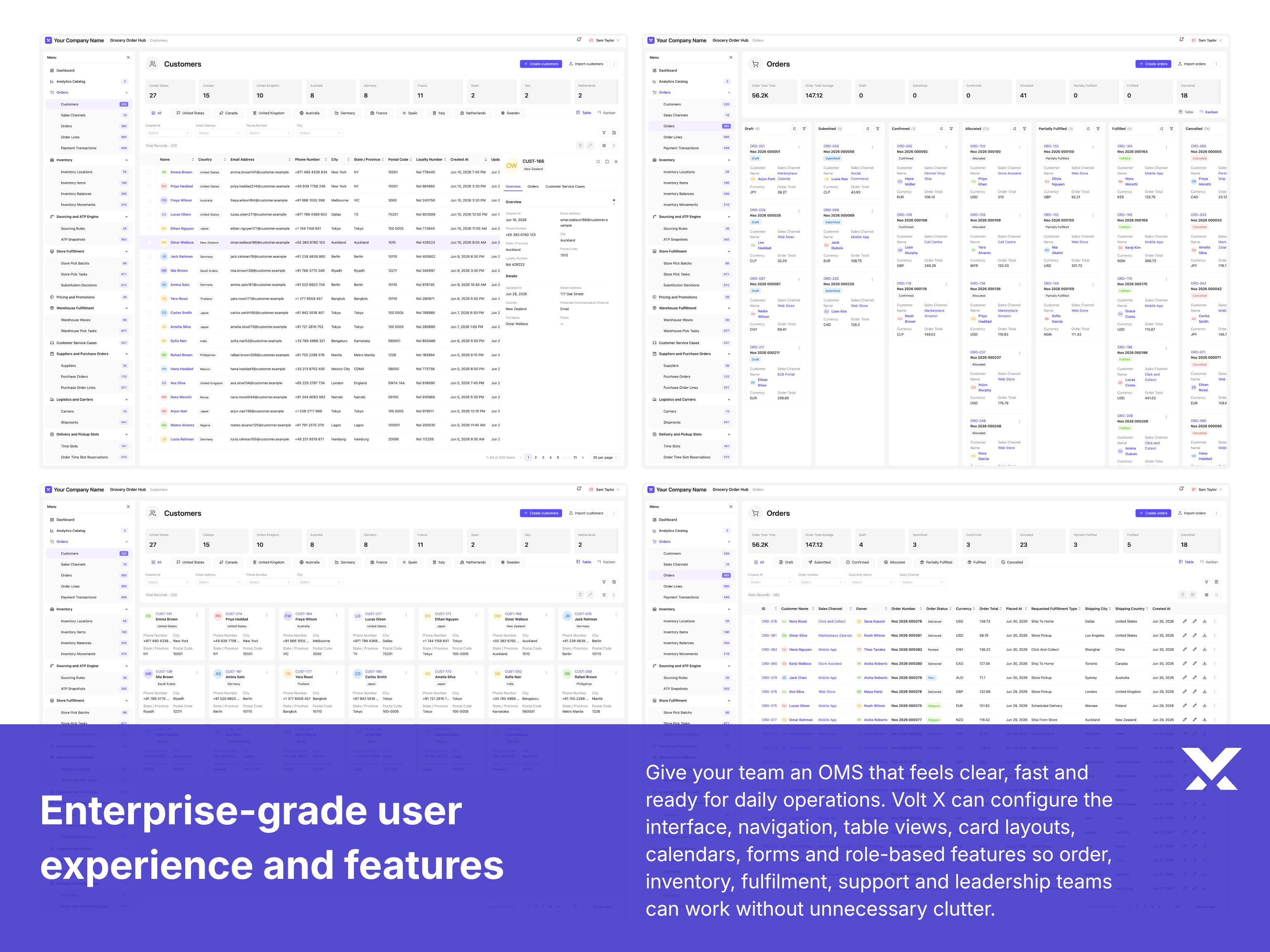
Volt X OMS enthält vier RBAC-Module in jedem Produktsystem: Benutzer, Benutzergruppen, Rollen und Berechtigungen. Diese können um Ihre Bestellteams, Fulfillment-Standorte, Lager, Filialen, Finanzteams, Service-Benutzer, Partnerzugriff, Marketplace-Teams, Genehmigungsregeln und internes Betriebsmodell herum angepasst werden.
Gutes RBAC macht Bestellmanagement sicherer und einfacher zu betreiben. Volt X kann den Zugriff so konfigurieren, dass jeder Benutzer die Bestellungen, Aktionen, Dashboards und Berichte sieht, die für seine Rolle benötigt werden, ohne Informationen oder Kontrollen preiszugeben, auf die er keinen Zugriff haben sollte.
VOLT X VORTEIL 5
OMS-Benachrichtigungen sollten Teams helfen zu handeln, bevor Bestellprobleme zu Kundenproblemen werden. Sie sollten Benutzer nicht mit wertlosen Alerts überfluten. Viele Standardsysteme machen Benachrichtigungsregeln zu starr, was zu verzögertem Fulfillment, verpassten Erstattungsgenehmigungen, langsamen Kundenaktualisierungen und zu viel manuellem Nachfassen führt.
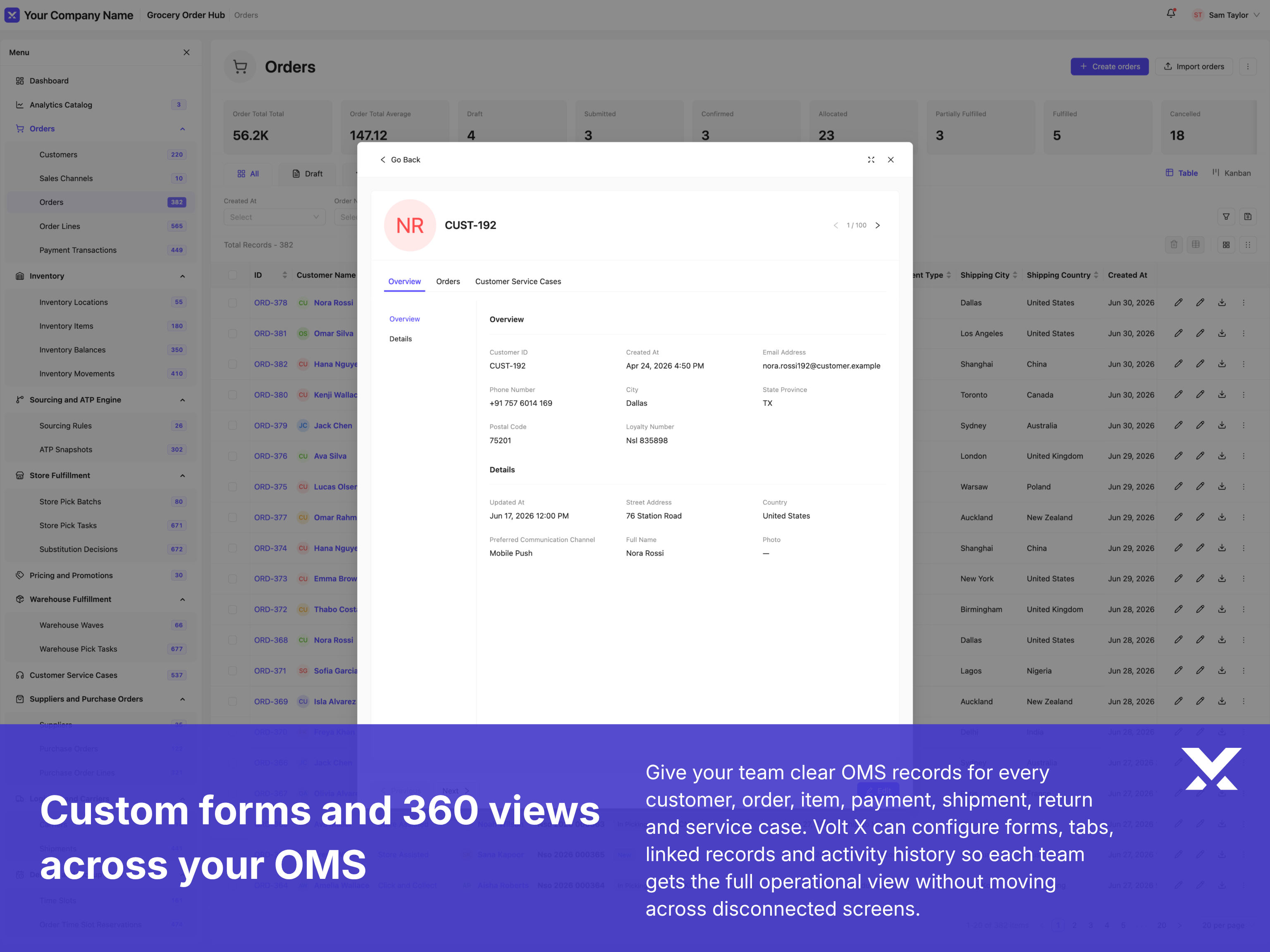
Volt X OMS kann ein individuelles Benachrichtigungsmodul enthalten, das um Ihren Bestellprozess, Zahlungsregeln, Zuordnungslogik, Fulfillment-Pfade, Retourenrichtlinie, Servicemodell und Benutzerrollen herum aufgebaut ist. Benachrichtigungen können nach Modul, Auslöser, Priorität, Empfänger, Zeitpunkt, Kanal und Geschäftsbedingung konfiguriert werden.
Das Ziel ist nicht, mehr Bestellalerts zu erzeugen. Das Ziel ist, Benachrichtigungen nützlich zu machen. Volt X kann Benachrichtigungsregeln erstellen, die Teams helfen, Bestellungen zur richtigen Zeit zu verarbeiten, zu erfüllen, zu erstatten, zu aktualisieren und zu lösen.
VOLT X VORTEIL 6
Bestellteams benötigen oft Zugriff abseits des Schreibtischs. Filialteams müssen möglicherweise den Bestellstatus prüfen. Lagerteams müssen möglicherweise das Fulfillment aktualisieren. Manager müssen möglicherweise Erstattungen auf Reisen genehmigen. Kundenservice-Benutzer benötigen möglicherweise schnelle Transparenz über Liefer- oder Retourenstatus.
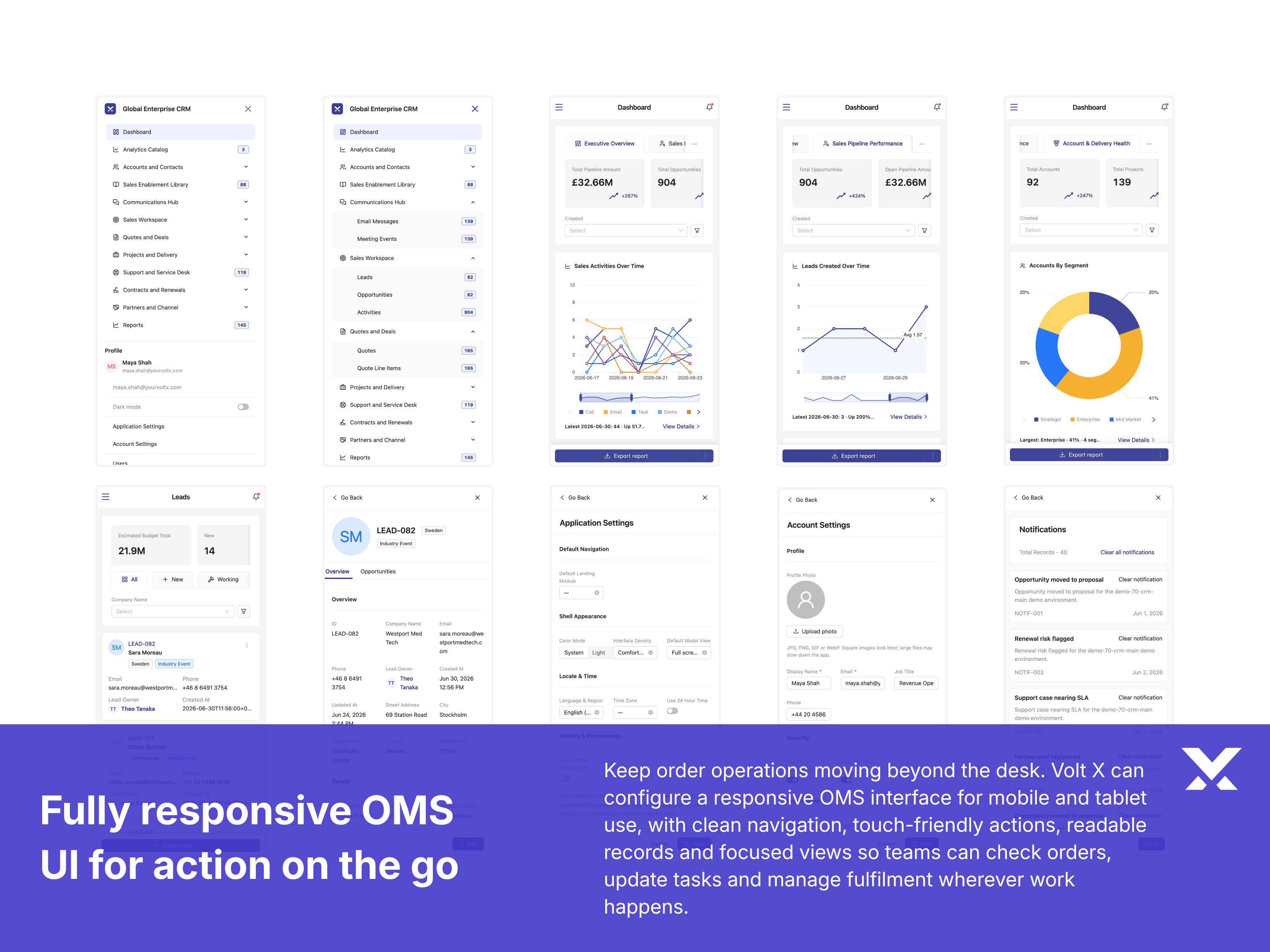
Jedes Volt X Produkt ist responsiv und kann mobile Ansichten unterstützen. Für OMS kann die mobile Erfahrung von voller Web-Parität bis zu einer fokussierten mobilen Version konfiguriert werden. Einige Rollen benötigen möglicherweise vollen Bestellzugriff auf dem Mobilgerät. Andere benötigen möglicherweise nur Bestellsuche, Fulfillment-Updates, Erstattungsgenehmigungen, Benachrichtigungen und Kundenaktualisierungsansichten.
Mobiles OMS sollte nicht einfach das Desktop-Produkt auf einen kleineren Bildschirm quetschen. Volt X kann mobile Ansichten Modul für Modul und Rolle für Rolle konfigurieren, damit jedes Team die richtigen Bestellfunktionen erhält, wenn es sie braucht.
VOLT X VORTEIL 7
Starke Unternehmenssoftware dreht sich nicht nur um Module und Workflows. Es geht auch darum, wie einfach sich das Produkt im täglichen Gebrauch anfühlt. Jedes Volt X Produktsystem enthält ein konsistentes Set von Interface-Steuerelementen, damit Teams in dem Layout arbeiten können, das zu ihnen passt, ohne auf individuelle Entwicklung warten zu müssen.
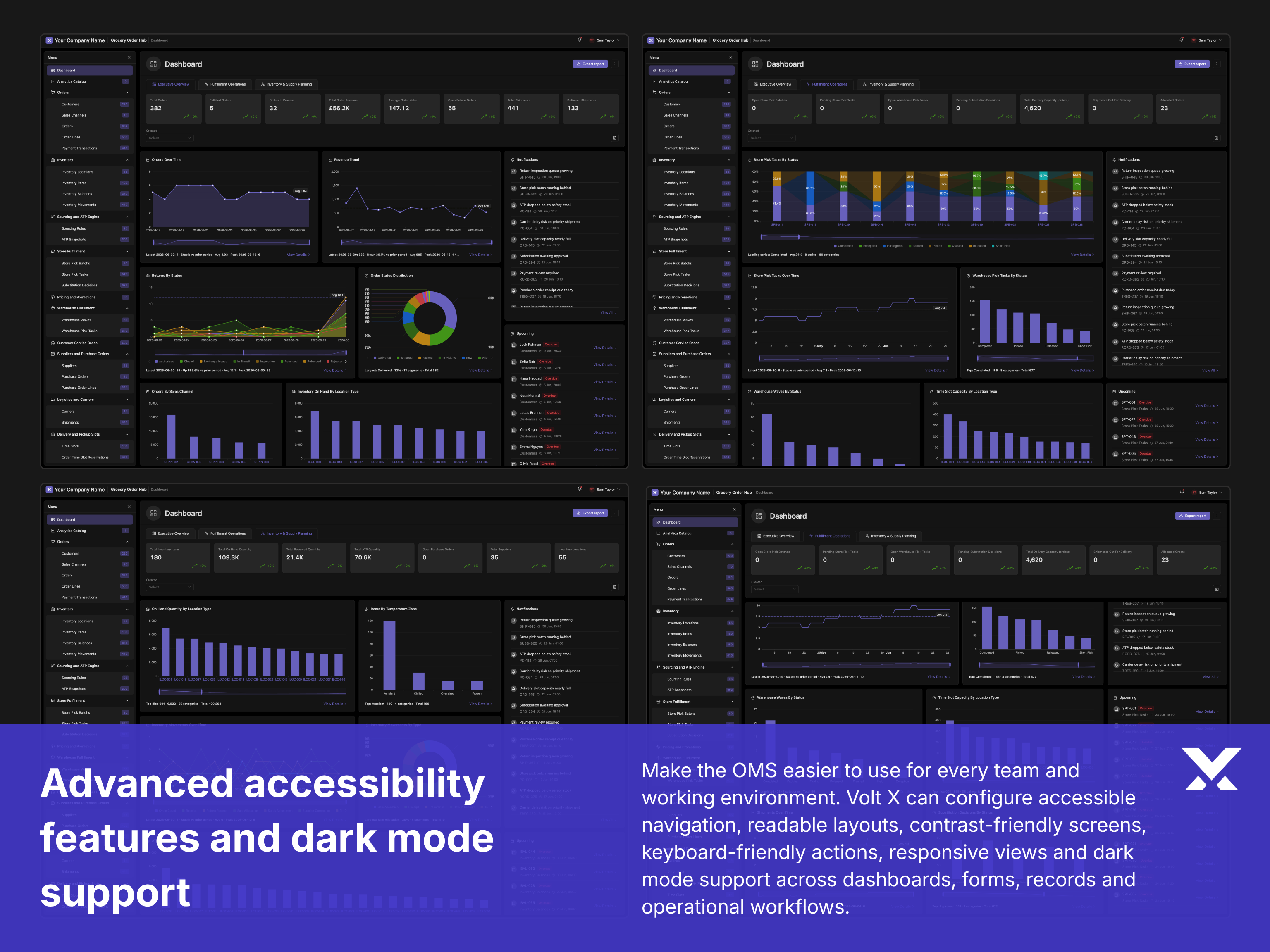
That includes list and card views, column management, hide-and-show stats cards, saved filtered views, dark mode, and the other small but important controls that make a product system feel mature from day one.
These controls are part of the shared Volt X product foundation, not optional extras. Teams can tune how data is shown, hide noise, save useful views, and switch display modes while staying inside governed permissions and audit rules.
Enterprise-Kontrollen
Ein hochwertiges OMS muss mehr tun als Bestellungen zu verarbeiten. Es braucht auch die Enterprise-Kontrollen, die das System zuverlässig machen: Benutzer, Rollen, Berechtigungen, Konfiguration, Auditierbarkeit, Integrationen, Sicherheit und operative Governance.
Diese Kontrollen sind an den OMS-Kontext angepasst, damit Ihre Teams Bestellungen, Zahlungen, Bestandszuordnung, Fulfillment, Retouren, Reporting, Integrationen und Betriebsregeln verwalten können, ohne die tägliche Administration zu einer technischen Abhängigkeit zu machen.
Volt-X-Delivery-Modell
Dies gibt jedem Projekt einen starken Ausgangspunkt über Workflows, Daten, Rollen, Berechtigungen, Oberflächen und Lieferlogik, bevor die Anpassung beginnt.
Dieses Modell bietet die Flexibilität von individueller Software, ohne das Projekt in eine unbegrenzte Entwicklung zu verwandeln. Ob wir von einer bekannten Produktkategorie oder einem neuen Geschäftsanwendungsfall ausgehen, Volt X erstellt zunächst eine strukturierte Enterprise-Grundlage und formt die Software dann um deine Workflows, Genehmigungen, Integrationen, Berichtsanforderungen, Markensystem und Betriebsmodell herum. Das Ergebnis ist Software, die sich maßgeschneidert für dein Unternehmen anfühlt, aber mit der Struktur, Konsistenz und Qualitätskontrolle eines ausgereiften Produktsystems gebaut ist.
Keine Lizenzfalle
Lizenzierte Standardsoftware zwingt Sie, Arbeitsplätze zu mieten, Anbieter-Roadmaps zu akzeptieren und Jahr für Jahr erneut für Funktionen zu bezahlen, die Sie nie wirklich kontrollieren. Volt X lizenziert keine Produkte. Wir liefern vollständig individualisierte Enterprise-Software, die in Ihrer Umgebung betrieben wird — als Ihr eigenes Asset.
Dieses Eigentum verändert, was möglich ist: Sie bestimmen die Roadmap, kontrollieren die Datengrenze, erweitern das Produkt ohne Genehmigung und können — wo Ihre Strategie es erlaubt — die Lösung produktisieren oder an einen größeren Markt weiterverkaufen. Keine dauerhafte Abonnementfalle. Kein Anbieter, der die Schlüssel hält.
Ihre Cloud, Ihre Datenresidenzregeln, Ihre Sicherheitsgrenze. Das Produkt läuft dort, wo Ihr Governance-Modell es verlangt — nicht auf einem Multi-Tenant-System eines Anbieters, das Sie nicht kontrollieren.
Nach der Übergabe gehört Ihnen das individualisierte Produkt. Es ist Ihr Software-Asset — kein Abonnement-Login, keine gemietete Instanz und keine Lizenz, die bei schwierigen Verhandlungen verfällt.
Volt X verkauft keine Arbeitsplatzlizenzen und keine Standardabonnements. Sie investieren in Software, die auf Ihr Unternehmen zugeschnitten und einmalig in Ihrer Umgebung bereitgestellt wird — ohne endlose Mietrechnung für dieselbe Leistung.
Wo Ihre Strategie es vorsieht, können Sie die Lösung produktisieren, als White-Label anbieten oder einem breiteren Markt zugänglich machen. Lizenziertes SaaS untersagt dies. Eigene Software nicht.
Sie sind nicht abhängig vom Release-Kalender anderer, von Preiserhöhungen, Funktionsstreichungen oder End-of-Life-Ankündigungen. Ihr Team kann eigenständig betreiben, erweitern und integrieren.
Jedes Volt X Produkt ist in sich vollständig und wird dann an Ihre Arbeitsabläufe, Rollen, Freigabeprozesse, Integrationen und Marke angepasst — so passt das, was Sie besitzen, bereits zu Ihrer Arbeitsweise.
Angrenzende Produkte
Kombinieren Sie OMS mit anderen Volt X Grundlagen, damit Bestellungen, Lager, ERP, Handel und Kundenkontext auf einer Linie bleiben.
Gespräch beginnen
Wir freuen uns, von Ihnen zu hören.
Was als Nächstes geschieht
Bevorzugen Sie E-Mail? business@yourvoltx.com
Produktsystem-Highlights
Ein strukturierter Überblick über die Order Management System-Grundlage, Modulbreite, Datenmodelltiefe, operative Abdeckung und die Produktsystem-Elemente, die eine ernsthafte Enterprise-Bereitstellung unterstützen.
Geschäftsmodule
Strukturierte Module, die die Kern-Workflows, Entitäten und operativen Bereiche abdecken, die von einer ausgereiften Produktsystem-Grundlage erwartet werden.
Attribute insgesamt
Datenfelder, Eigenschaften und Konfigurationspunkte, die modulübergreifend abgebildet sind, damit das Produktsystem an Ihr Geschäftsmodell angepasst werden kann.
Operationen und Aktionen
Definierte Operationen, Übergänge und Benutzeraktionen, die die tägliche Ausführung über Teams, Rollen und Workflows hinweg unterstützen.
Zusätzliche Mehrwerte
Zusätzliche Fähigkeiten, Beschleuniger und Produktsystem-Erweiterungen, die Benutzerfreundlichkeit, Kontrolle und Bereitstellung über die Basismodule hinaus stärken.
Konfigurierbare Workflows
Workflow-Muster, Genehmigungspfade und Prozessstrukturen, die angepasst werden können, ohne die zugrunde liegende Produktgrundlage neu aufzubauen.
Integrationspunkte
Verbindungspunkte für Datenaustausch, APIs, Events und Drittsysteme, damit das Produktsystem in Ihre übrigen Unternehmensanwendungen passt.
Wertnachweis
Volt X OMS ist darauf ausgelegt, die operative Leistung Ihres Bestelllebenszyklus zu verbessern, indem es Bestelltransparenz, Fulfillment-Disziplin, Bestandszuordnung, Ausnahmebehandlung, Kundenkommunikation und Kanalkontrolle stärkt.
Wenn es auf Ihr Bestellmodell zugeschnitten und von Ihren Teams korrekt eingesetzt wird, kann Volt X OMS messbare Verbesserungen bei Fulfillment-Effizienz, Bestellgenauigkeit, Betriebskosten, Kundenerfahrung und Time-to-Value liefern.
Potenzieller ROI aus der Bestellmanagement-Transformation
Volt X OMS ist darauf ausgelegt, Investitionen zu rechtfertigen, indem es verbessert, wie Bestellungen über Kanäle, Bestand, Fulfillment, Service und Reporting bewegt werden. Mit dem richtigen Betriebsmodell und Adoption kann ein OMS-Programm potenziell ROI im Bereich von 100 Prozent plus unterstützen.
Potenzielles Amortisationsfenster
Volt X OMS ist darauf ausgelegt, schnell Wert zu schaffen, indem es manuelle Bestellbearbeitung reduziert, Fulfillment-Routing verbessert, Bestelltransparenz zentralisiert und Ausnahmen einfacher lösbar macht. Mit fokussiertem Rollout kann die Investition potenziell innerhalb von Monaten amortisiert werden.
Potenzielle Reduzierung des manuellen Bestellaufwands
Volt X OMS hilft, den manuellen Aufwand zu reduzieren, der durch getrennte Kanäle, doppelte Bestelleingabe, unklare Zuordnungsregeln, wiederholte Statusprüfungen und fragmentierte Ausnahmebehandlung entsteht. Mit der richtigen Konfiguration können Bestelloperationen den manuellen Verarbeitungsaufwand potenziell um bis zu 50 Prozent reduzieren.
Potenzielle Verbesserung der Fulfillment-Effizienz
Volt X OMS kann die Fulfillment-Leistung verbessern, indem es Bestellpriorität, Bestandsverfügbarkeit, Fulfillment-Standort, Versandbereitschaft, Retourenregeln und Kundenkommunikation verbindet. Mit den richtigen Workflows können Unternehmen die Fulfillment-Effizienz potenziell um etwa 30 Prozent verbessern.